 Collectors Tools
Why a GEM MT 10 ticket is nearly impossible
A used ticket stub reaches PSA GEM MT 10 three times in a thousand. An unused full ticket does it forty times more often. Whether a ticket can be perfect is mostly decided before it ever reaches a grader.
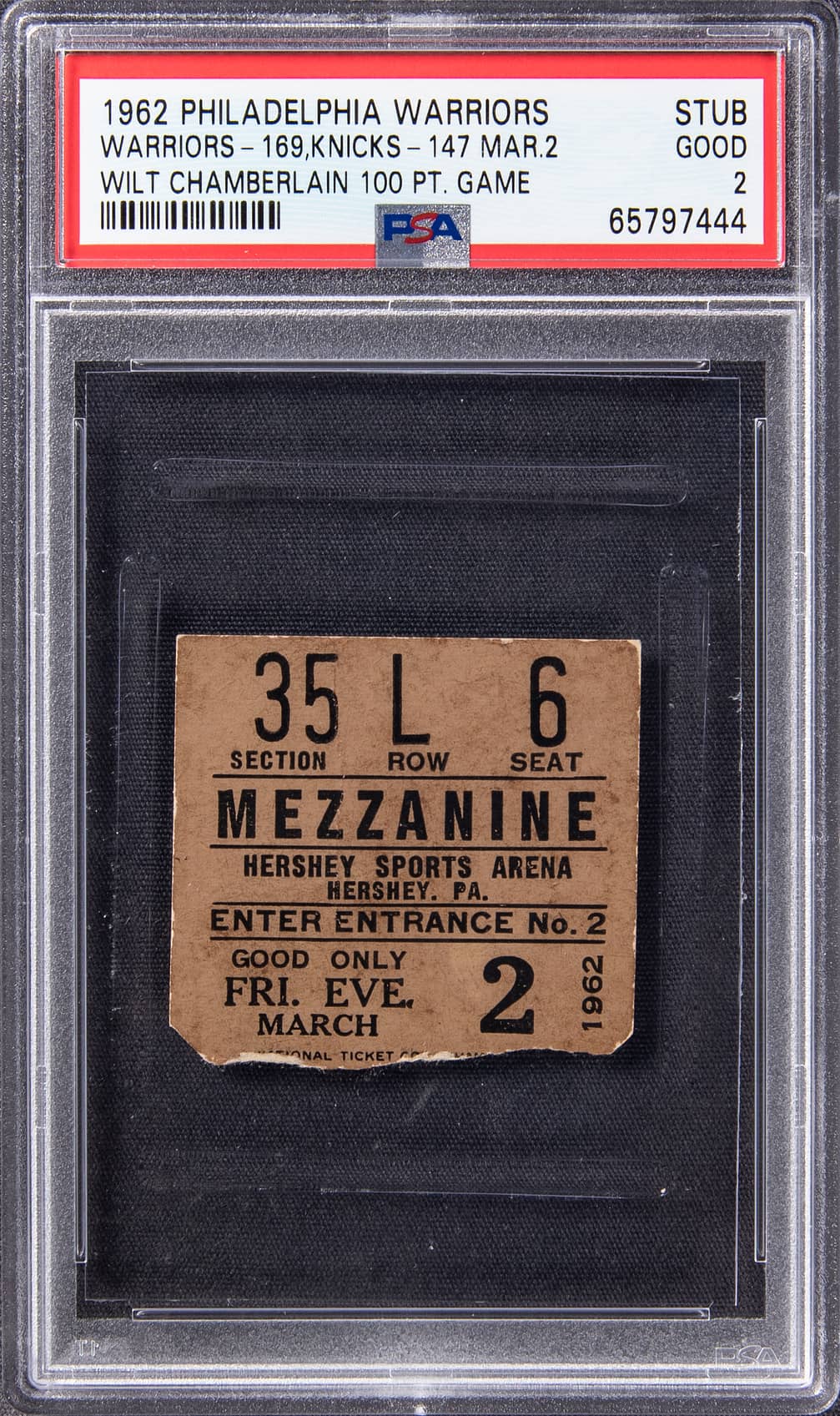
A used ticket stub reaches PSA GEM MT 10 three times in a thousand. An unused full ticket does it forty times more often. Whether a ticket can be perfect is mostly decided before it ever reaches a grader.
GEM MT 10 is PSA's top ticket grade: effectively flawless corners, centering and surface. Across the whole graded-ticket population, 7.7% get there, which is already rare against a trading-card population where 10s are common. But that 7.7% is an average hiding two very different worlds. Using the July 2026 census (captured 8 to 11 July 2026, every item's count at every grade), the odds of a gem mint 10 ticket come down mostly to two things a collector never controls: the era the ticket is from, and whether it is a full ticket or a stub. Neither is about luck at the grading counter.
Old tickets almost never grade a 10
Sort every graded ticket by the decade of its event and the GEM 10 rate climbs from almost nothing to nearly a third. Pre-1960 tickets reach GEM 10 about one time in a thousand (0.1%). Tickets from 2020s events do it 32.9% of the time, more than 300 times as often. In absolute terms the 2010s hold the most perfect tickets (7,499 GEM 10s), simply because more modern tickets exist, but the rate is the real story: the newer the event, the better the odds a copy is flawless.
The obvious explanation is that modern tickets are printed on better stock, and some are. But that is not the whole cause, because the rate rises even when you hold the ticket type fixed. Among full tickets alone, the GEM 10 rate went from 10.0% for 1990s events to 32.8% for 2020s events. The same unused-full ticket is far more likely to be flawless now than a generation ago. Broken out by single year, the market-wide rate reached 44.5% for 2023 events and 40.2% for 2024, against low single digits before 2010. The ticket that used to be shoved in a drawer is now slipped into a sleeve on the way out of the stadium. People began treating tickets as collectibles, and the grades followed.
But mostly, it comes down to full versus stub
The single biggest factor is not the era at all, it is what part of the ticket survived. A full ticket was never torn: it belonged to someone who did not attend, or who kept it whole as a souvenir. A stub is the torn remnant that went through the turnstile, folded into a pocket and carried through a crowd. One was preserved by definition; the other was used by definition. The grades split accordingly.
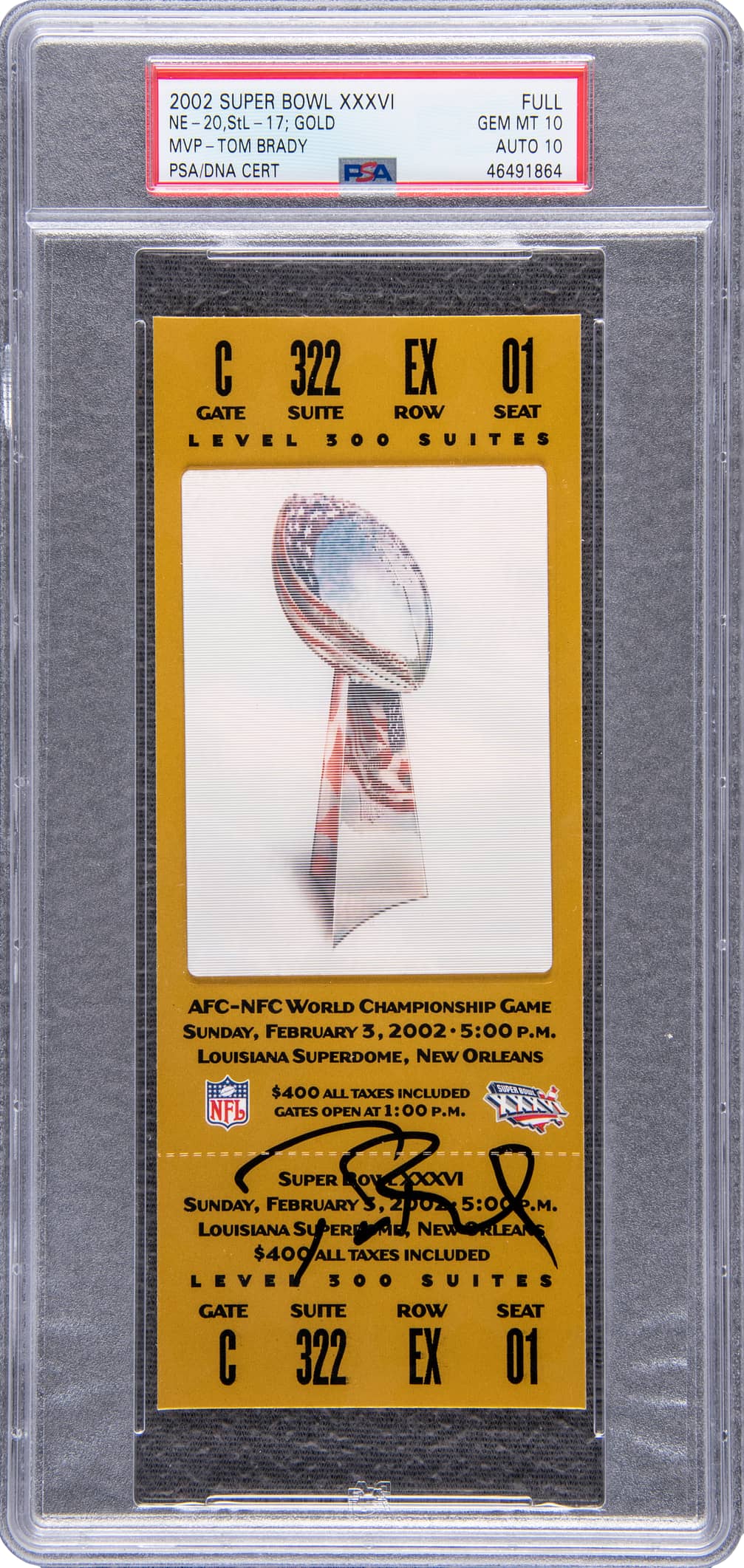
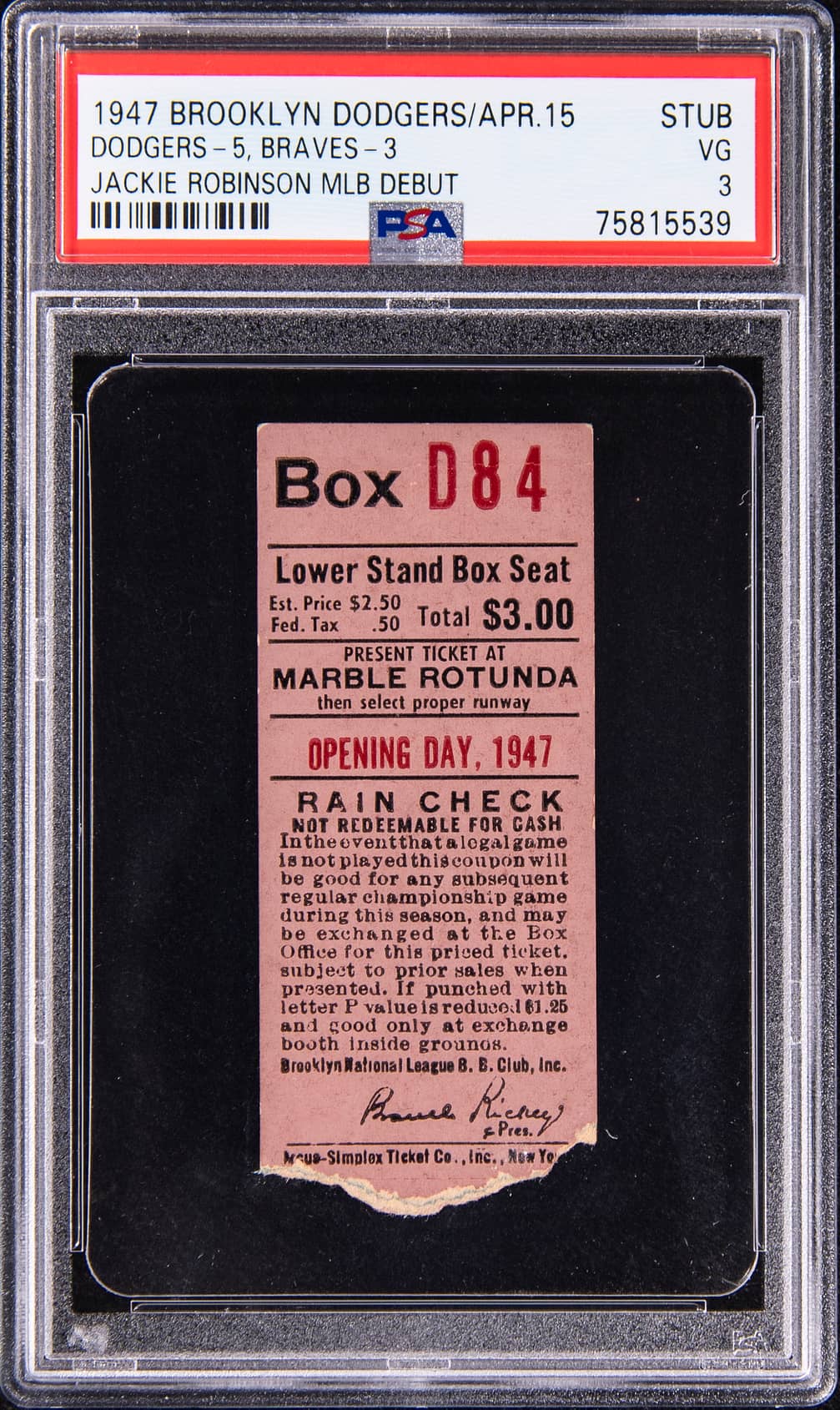
Put the two grade curves side by side and they are mirror images. Full tickets pile up at the top: 19% grade NM-MT 8, 16% grade MINT 9, 13% grade GEM MT 10. Stubs collapse to the bottom, spread across the low grades, with more than one in five graded only Authentic (trimmed or too worn for a number). The most common outcome for a full ticket is a high grade; the most common outcome for a stub is a low one.
This is also why the full-and-stub distinction matters so much to price, which we cover in full ticket versus stub and what a full ticket is. A GEM MT 10 stub is almost a contradiction: to earn the grade it had to survive untouched, but to be a stub it had to be torn and used.
The controlled test: same game, both forms
Era and form could be tangled together, since modern tickets are more often kept as fulls. So we ran the clean test: take only the moments that exist as both a full ticket and a stub, where the event, the year and the print run are identical, and the only difference is which part survived. The census has 4,834 such moments. Within them, the full ticket carries the higher average grade 74% of the time, and the gap in GEM rate is stark.
The individual pairs make it concrete. Cal Ripken's 2000 3,000th-hit ticket is 82% GEM 10 as a full and 33% as a stub. The 2018 Super Bowl LII ticket is 16% GEM as a full, 3% as a stub. Same game, same day, same printing: the only variable is whether the holder walked through the gate with it. When they did, the perfect grade was gone before the ticket ever reached PSA.
See the grade spread for any ticket
Type a name and results appear instantly. Groups with a View examples button open the real graded slabs at each grade, in place.
A perfect ticket is not made at the grading counter; it is made in the moment someone decides not to use it, or to keep it flat afterward. That is why only 7.7% of graded tickets are GEM MT 10, why the rate is climbing as collectors learn to preserve, and why a pristine stub of a legendary game is one of the rarest objects in the hobby. Check the full grade spread for any ticket on the population report, or read how modern tickets came to grade like cards.
Explore the data behind this report
Search every graded ticket sale, browse PSA population data, and track sold prices on Collectors Tools.