 Collectors Tools
The most-graded tickets are the moments people knew to keep
A ticket's population does not measure how rare it is, it measures whether the world knew to keep it. The most-graded tickets are the games everyone understood were historic as they happened, while the debuts of then-unknowns survive in single and double digits, and command the records.
It is natural to read a high population as a warning and a low one as a prize, the way grading works for cards. Tickets invert it. The most-graded tickets in existence are not obscure rarities, they are the most famous moments in sport and culture: the games a stadium full of people walked out of knowing they had seen history, and kept the ticket. Population is not a rarity score for a ticket. It is a record of whether the world knew, at the time, that the moment was worth saving. This post ranks the tickets people saved most, and shows why that makes them some of the cheapest in the hobby.
The method: each population below is the live PSA graded total for that exact ticket, read this week from PSA's population report and combined across every variation, full ticket and stub (as of June 29, 2026, populations change as more are graded). Prices are realised sales we track across Goldin, Heritage and Fanatics Collect; where one moment is compared with another, the prices are taken from the same 2024 to 2026 window so market timing cannot explain the gap. You can open any cert on the ticket scan database or compare graded supply on the population report.
The most-graded ticket is a festival nobody collected for rarity
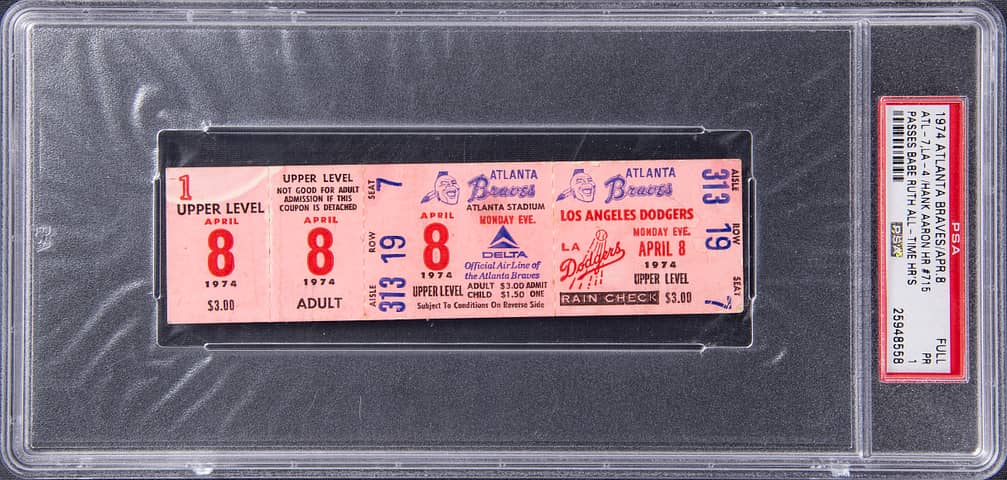
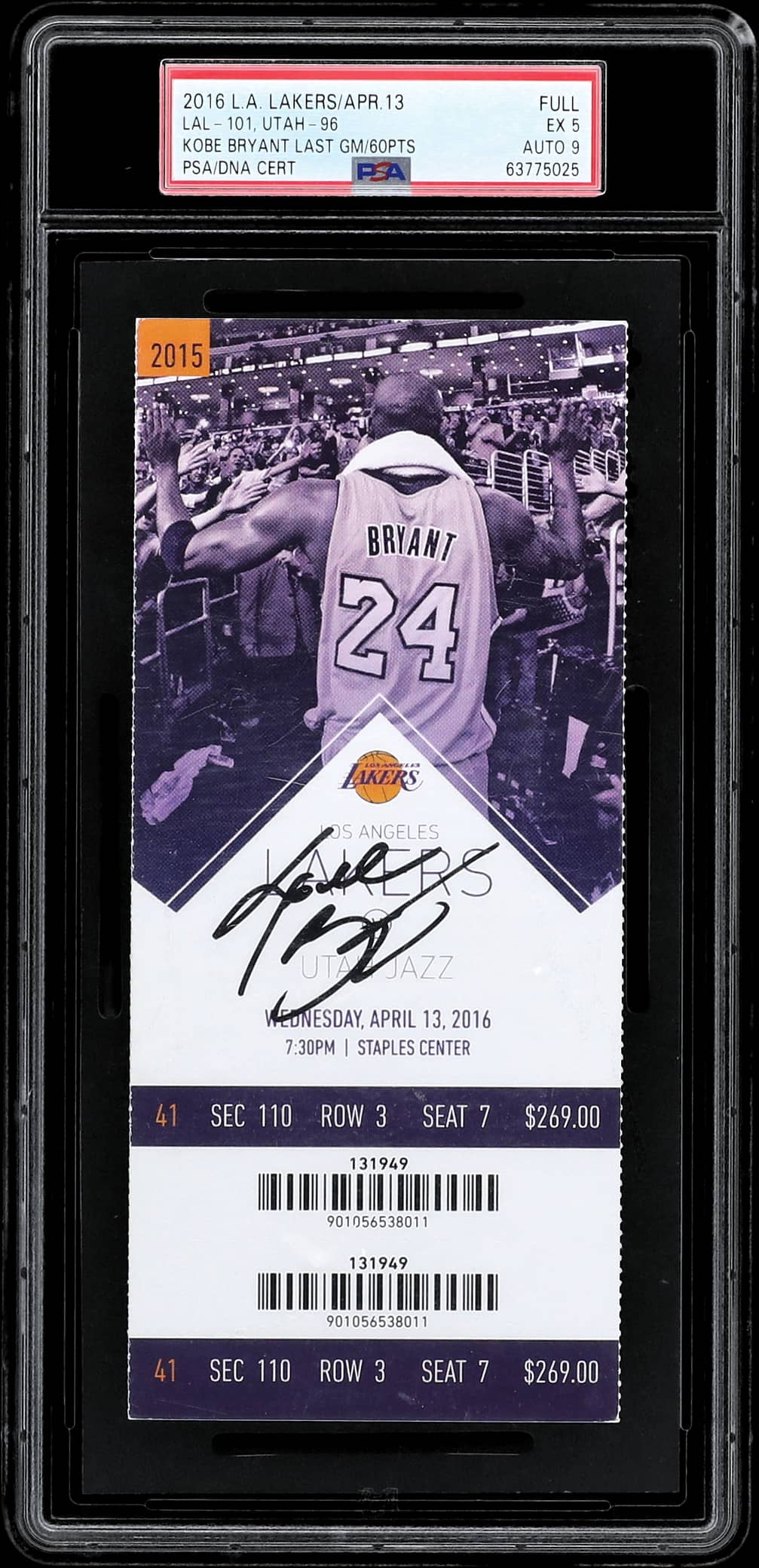
The single most-graded ticket in the hobby is the 1969 Woodstock festival ticket, with 4,663 graded by PSA. It is common in flawless condition because the gates were never staffed and a cache of roughly 150,000 unissued tickets later surfaced from a safe, the full story is in our Woodstock ticket price breakdown. Behind it, the most-graded sports tickets are a roll call of moments everyone present knew were historic. The 1965 Ali vs Liston rematch (the "Phantom Punch"), printed in five souvenir colours, totals about 920. Kobe Bryant's 60-point final game sits at 537. Hank Aaron's record-breaking 715th home run is over 400.
Population is a record of what people thought mattered
Sort the list by why each ticket was kept and a pattern appears. They are championships and finals (the 1958 World Cup, the Super Bowls that dominate the modern population), records (Aaron's 715 and Judge's 62nd), farewells (Kobe's last game), and cultural events so large they were news before they ended (Woodstock, the Miracle on Ice, the Phantom Punch). In each case the spectator walked in already knowing the day was special, so the ticket went into a frame instead of a bin. A high population is the fingerprint of that recognition.
The modern entries make the same point a different way. Aaron Judge's 62nd home run and Kobe's finale were graded in real time, by fans who knew during the event that they were holding history, the same instinct that now keeps modern tickets intact and gem-mint (see why modern tickets grade like cards). The difference between a 537-population ticket and a 5-population one is rarely the print run. It is whether anyone thought to keep it.
Which is why the most-graded tickets are the cheapest
Here is the twist. Because population tracks how many people saved a ticket, it runs opposite to price. Line the moments up from most-graded to least and the median sale price climbs the whole way down. In the same 2024 to 2026 window, Woodstock (4,663 graded) carries a $351 median, Aaron's 715 (over 400) sits at $516, Kobe's finale (537) at $778, and the far scarcer Miracle on Ice (173) jumps to $4,941. Same market, same years: the more a ticket was saved, the less each copy is worth.
| Ticket | PSA population | Median (2024-26) | Top sale |
|---|---|---|---|
| 1969 Woodstock festival | PSA population4,663 | Median (2024-26)$351 | Top sale$1,920 |
| 1965 Ali vs Liston II | PSA population~920 | Median (2024-26)$635* | Top sale$9,900 |
| 2016 Kobe 60-pt finale | PSA population537 | Median (2024-26)$778 | Top sale$20,740 |
| 1974 Hank Aaron HR #715 | PSA population~424 | Median (2024-26)$516 | Top sale$9,000 |
| 1997 Tiger Woods Masters | PSA population365 | Median (2024-26)$2,051 | Top sale$11,895 |
| 1980 Miracle on Ice | PSA population173 | Median (2024-26)$4,941 | Top sale$26,400 |
| 2018 Shohei Ohtani MLB debut | PSA population64 | Median (2024-26)$2,684 | Top sale$125,660 |
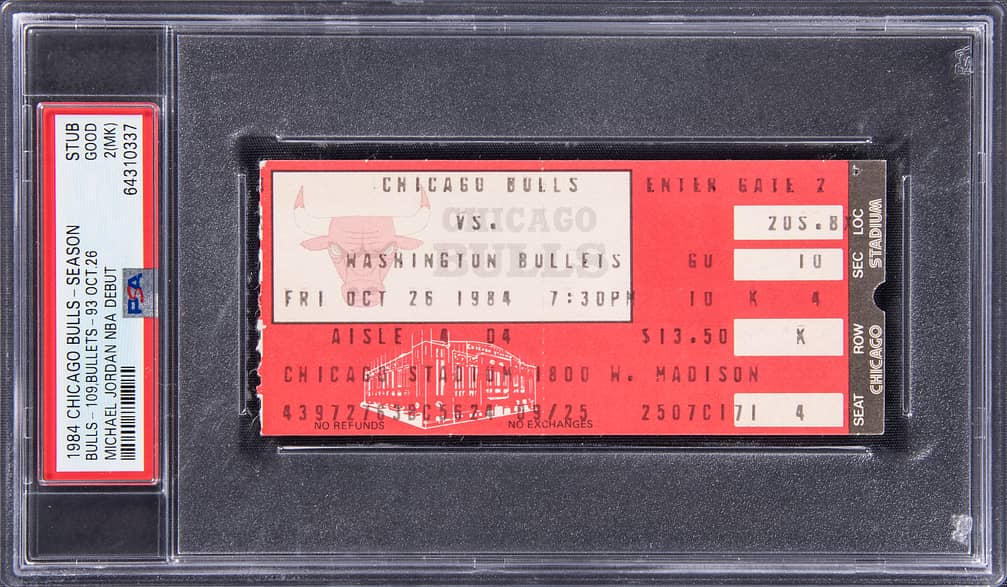
| 1984 Michael Jordan NBA debut | PSA population~70 | Median (2024-26)$3,050 | Top sale$468,000 |
The exceptions inside the list prove the rule, because they are about supply too. Tiger's 1997 Masters badge is rarer than Aaron's 715 and sells higher; the Miracle on Ice is rarer again and higher still. Once you are inside the tier of genuinely famous moments, the scarcer one wins, and modern demand lifts recent moments (Kobe, Ohtani) above vintage ones at a similar count. Recognition decides whether a ticket was saved at all; after that, scarcity sets the price among the survivors. (*Ali-Liston had no 2024-26 sales in our data, so its median is the full-window figure.)
The unknown debut is the mirror image
If the saved moments are common and cheap, the opposite corner is where the records live: the debut of a player nobody yet knew. No one framed the ticket, because on the day it was an ordinary game, so almost none survive, and the few that do are fought over. PSA has graded about 70 examples of Michael Jordan's 1984 NBA debut across every stub and full variation, and the only known full ticket sold for $468,000. Lionel Messi is the sharpest case of all: his heavily-marketed 2003 Porto friendly debut was saved in numbers (we track around 200), but his official competitive La Liga debut against Espanyol, October 16 2004, is graded just 17 times in total, full, stub and pass combined. The real first step, the one no one recognised, barely exists.
Read this way, a population figure tells you about people, not paper. A big number means a stadium full of fans knew they were watching something they would want to remember, and kept the proof: Woodstock, the Miracle on Ice, Kobe's 60, Aaron's 715. A tiny number means the moment looked ordinary while it happened and was only understood later, which is exactly why those tickets set the records. The most-graded tickets are the famous ones, the most valuable are the ones nobody saw coming, and the gap between the two is the whole game.
Explore the data behind this report
Search every graded ticket sale, browse PSA population data, and track sold prices on Collectors Tools.