 Collectors Tools
What actually drives a graded ticket's price once its population gets high
On modern tickets that exist in the hundreds, the PSA grade is the lever the market pulls first and the weakest of the real price drivers. The signature, the finest-known copy and the rarer access tier move the money. High population is what exposes the gap.
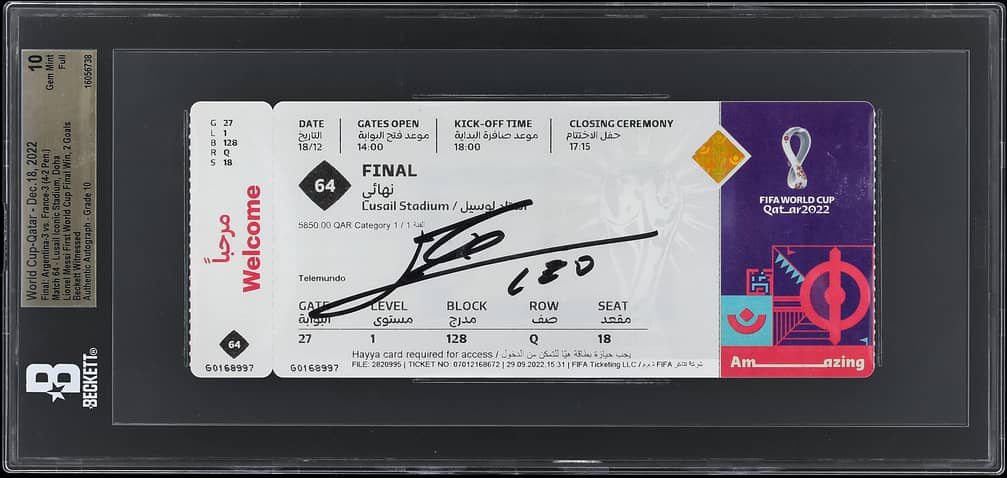
The most expensive Lionel Messi 2022 World Cup Final ticket we have tracked sold for $87,840 in a BGS Gem Mint 10 holder. The cheapest signed copy of the exact same match, a Beckett 10 stub, sold for $8,235. Between them sit ten more sales of the same ticket at PSA base grades from 2 to 9, and the price does not climb with the grade. A signed PSA 2 full sold for $10,800, more than a signed PSA 6 full at $8,845. Two signed PSA 9 copies sold for $29,280 and $11,712, a 2.5x gap at identical base grade. The grade is not setting the price.
Every figure here is a realised sale from public.sales, our archive of graded ticket sales across Heritage, Goldin and Fanatics Collect, 2003 to June 2026. Population counts were read live from each ticket's PSA cert page as of June 25, 2026 and are point-in-time: more copies are graded every month, so the numbers only rise. The question this post answers is the one that matters most for modern tickets, the ones being signed and graded in volume right now: when a ticket already exists in the hundreds, what actually decides what it sells for?
Grade is the first lever, and on a common ticket it works
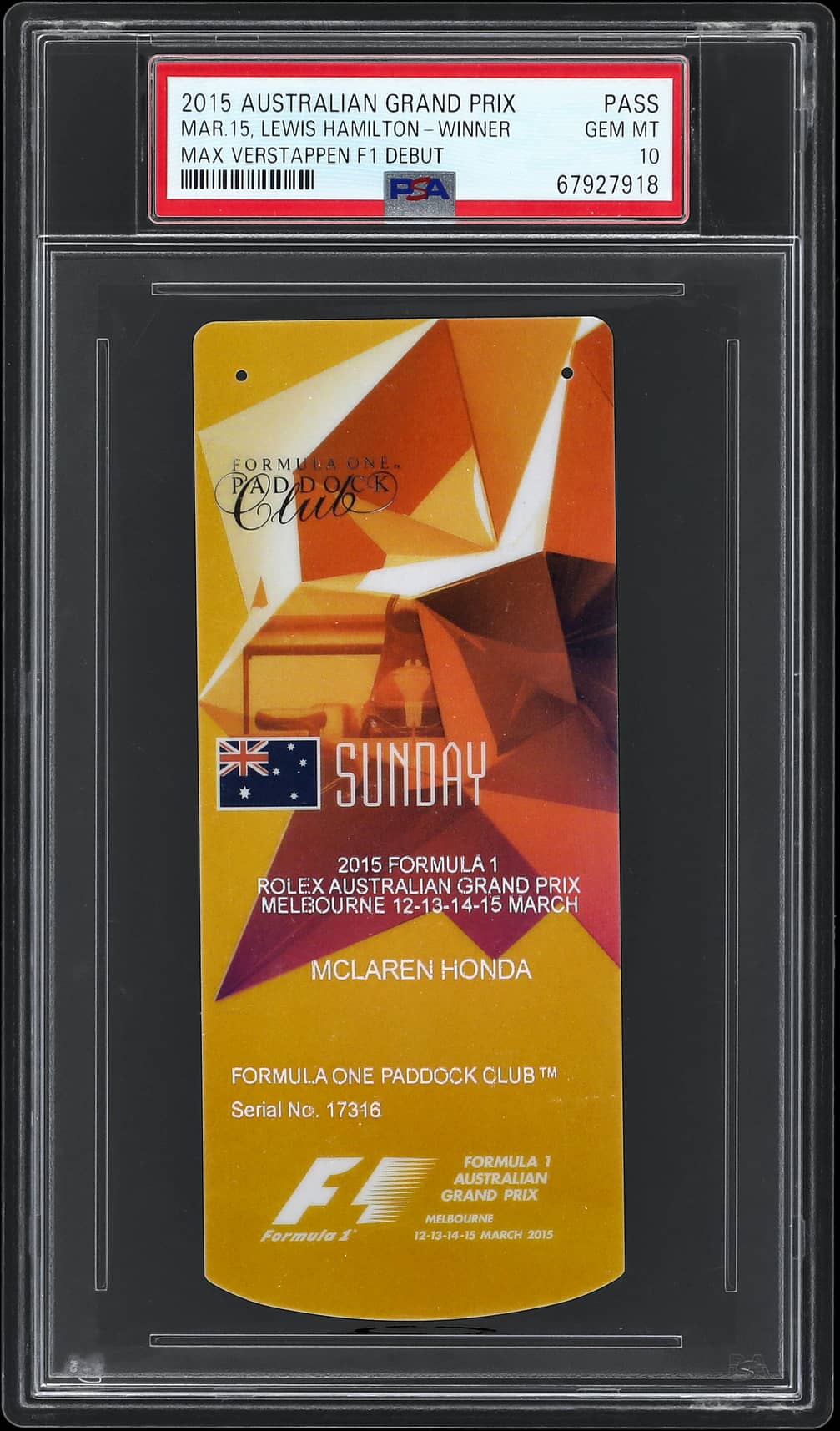
Start with the case the market gets right. Take a single, unsigned, modern ticket that survives in quantity and the grade ladder behaves exactly as a card collector expects: each step up the grade scale costs more. The 2015 Max Verstappen Formula 1 debut pass (Australian Grand Prix) is a clean example. A PSA 8 sells for a median $372, a PSA 9 for $1,329, and a PSA 10 for a median $2,509, up to $3,600 for the best examples. Grade roughly 7x the price from PSA 8 to PSA 10. Hold the ticket, the variety and the signature constant, and grade is the only variable left, so it does all the work.
High population breaks the grade-equals-price rule
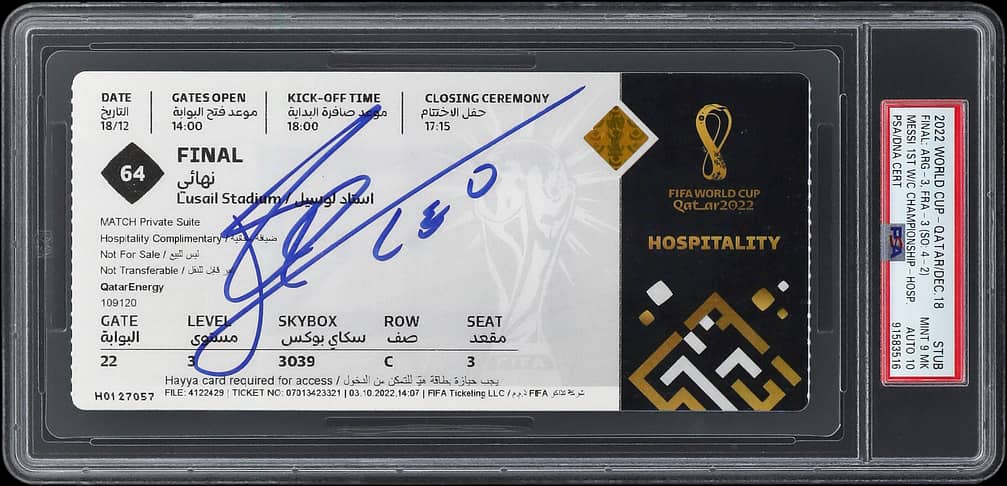
The Messi 2022 World Cup Final signed full ticket is the clearest case in modern tickets. The match is the most significant in a generation, the ticket was signed in numbers, and dozens have been graded, so supply is real. Order the twelve sales we track by price and the PSA base grade scatters from 2 to 10 with no relationship to the money. What does track the price is what the slab certifies beyond the grade: the autograph grade, and the holder. At an identical PSA 9 base, an autograph graded PSA/DNA 10 sold for $29,280 while a PSA/DNA Authentic (ungraded signature) sold for $11,712. Same ticket, same base grade, the signature grade doubled the price.
| Ticket / holder | Base grade | Autograph | Sold |
|---|---|---|---|
| Full, BGS Gem Mint 10 | Base gradeBGS 10 | AutographBeckett 10 | Sold$87,840 |
| Stub, PSA 9 | Base gradePSA 9 | AutographPSA/DNA 10 | Sold$29,280 |
| Full + signed jersey | Base gradePSA 9 | AutographPSA/DNA 10 | Sold$22,800 |
| Full, PSA 8 | Base gradePSA 8 | AutographPSA/DNA 10 | Sold$17,080 |
| Messi/Mbappe dual-signed | Base gradePSA 6 | AutographPSA/DNA Auth | Sold$16,165 |
| Full, PSA 9 | Base gradePSA 9 | AutographPSA/DNA Auth | Sold$11,712 |
| Full, PSA 2 | Base gradePSA 2 | AutographPSA/DNA 9 | Sold$10,800 |
| Full, PSA 6 | Base gradePSA 6 | AutographPSA/DNA 10 | Sold$8,845 |
| Stub, Beckett 10 | Base gradeBGS 9 | AutographBeckett 10 | Sold$8,235 |
Why population is the thing that exposes the gap
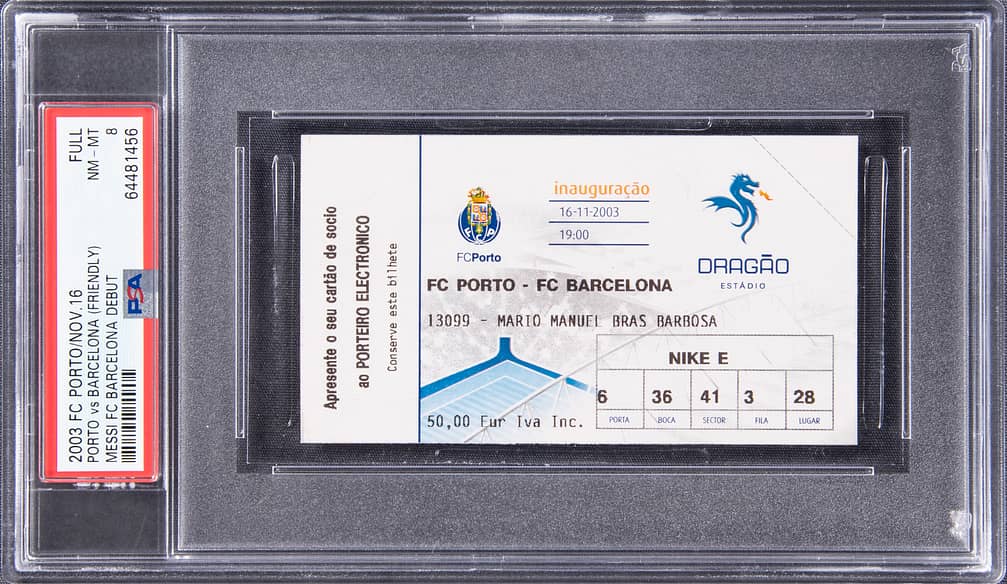
When only one or two of a ticket exist, the question never comes up: you buy the one that is available. The gap only appears once there are enough copies to choose between. Modern debut tickets are now firmly in that range. The 2003 Messi FC Barcelona debut ticket is a good gauge because it is the most-graded modern soccer debut. As of June 25, 2026, its PSA full-ticket population reads 17 at PSA 4 with 75 graded higher, so 92 full tickets sit in PSA holders at PSA 4 or better out of 106 graded in total, and the stub adds another 115 across the grade scale. One single debut ticket, graded into the hundreds.
The scarcity the market under-prices: variety and access tier
The factor the market reads worst is variety: which version of the ticket it is. A single event issues general-admission tickets, premium and hospitality tickets, and credential or paddock passes, and they survive in very different numbers. The 2007 Lewis Hamilton Formula 1 debut (Australian Grand Prix) shows the market getting this backwards. Hold the grade at PSA 8 and the price swings from $145 for a 'Debut Weekend' pass and $210 for a 'Pit Lane Walk Only' pass, up to $3,111 for the actual paddock debut pass. Same grade, a 21x spread, decided entirely by which variety the slab holds.
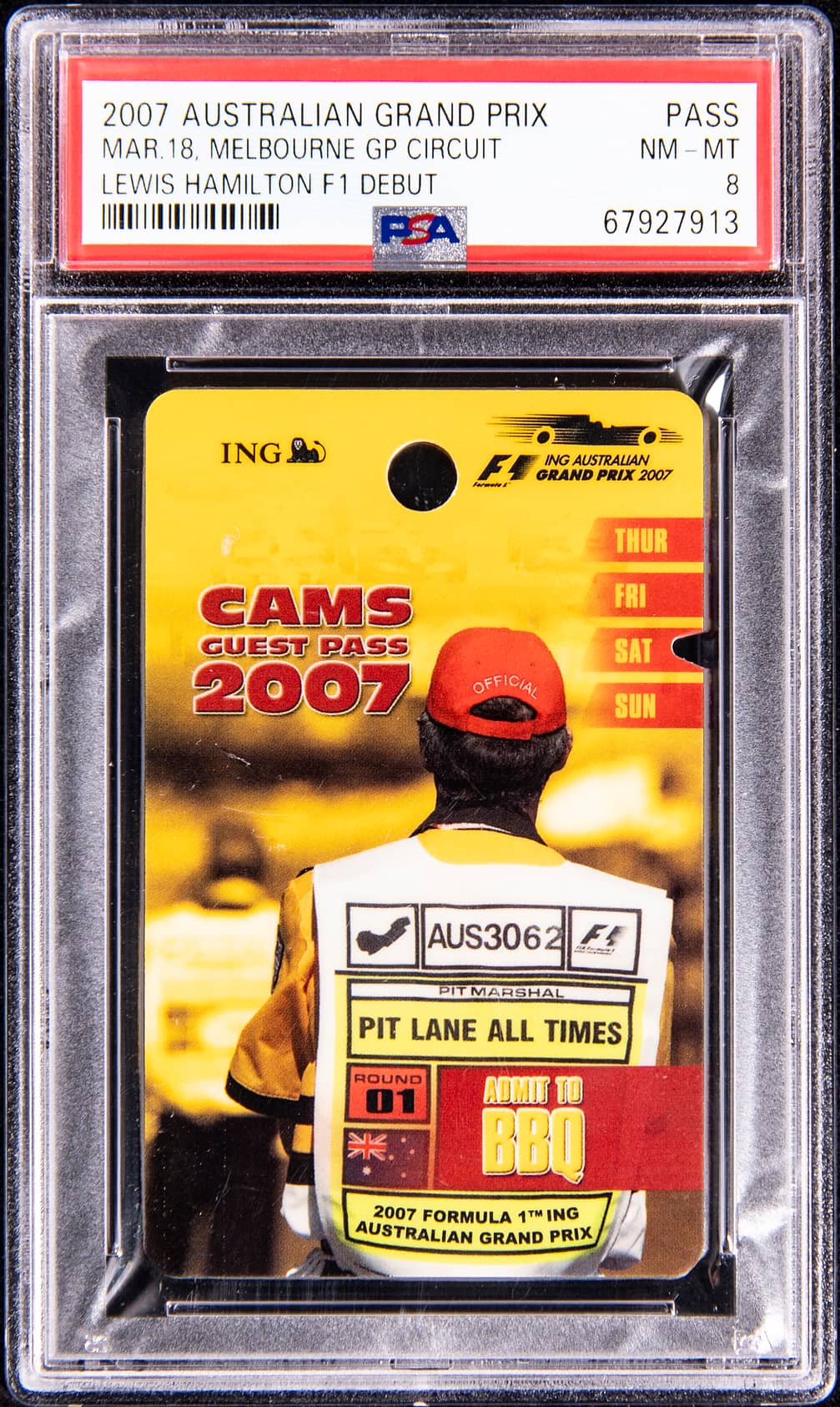
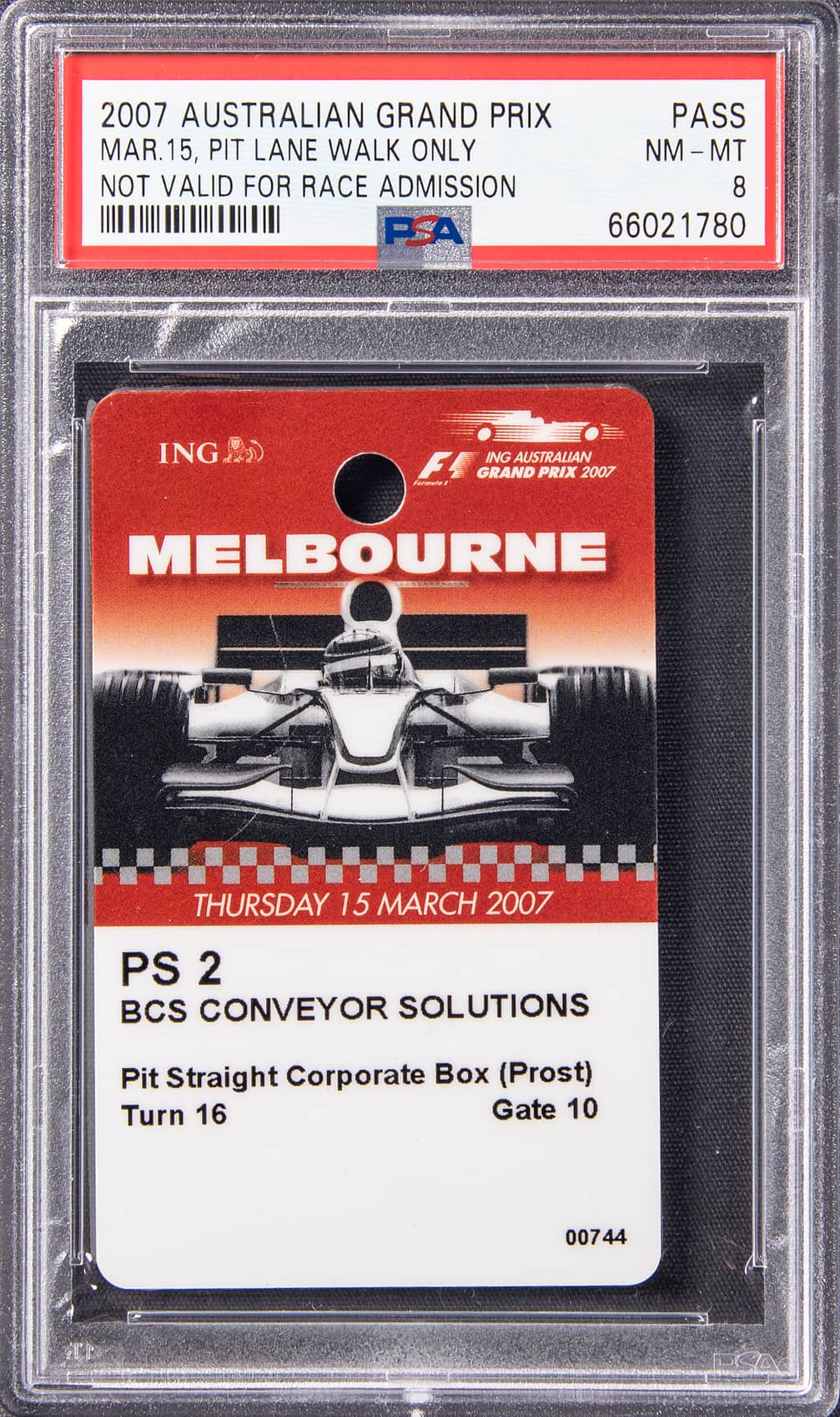
The clearest sign that grade is over-weighted is when a lower grade of the better variety beats a higher grade of the worse one. A PSA 7 Hamilton debut paddock pass sells for a median $1,373, six times the PSA 8 pit-walk pass at $210. A buyer reading only the number on the label would take the PSA 8 and pay more for less. And the single highest Hamilton debut sale was not a 10 at all: a PSA 6 graded the only one of its kind by PSA (Pop 1 of 1, none higher) sold for $5,160, above every higher-grade copy. Finest-known scarcity outranked four grade points.
So when a ticket's population is high, grade is the first thing the market prices and the least of what actually moves it. The signature and its grade, the variety and access tier, and being the finest known each outweigh a grade point or two, and the deeper the population, the more they decide the order. For common, unsigned, single-variety tickets, keep paying up for grade. For anything signed, multi-variety or genuinely scarce at the top, the grade is the floor of the story, not the whole of it.
Explore the data behind this report
Search every graded ticket sale, browse PSA population data, and track sold prices on Collectors Tools.